What is unfolding in Minneapolis is not an isolated regional dispute. It reflects a broader pattern emerging in Democratic-controlled states and cities, including Illinois, where state and local officials are increasingly clashing with federal authorities over immigration enforcement, public safety, and accountability.
Minnesota's Escalating Tensions
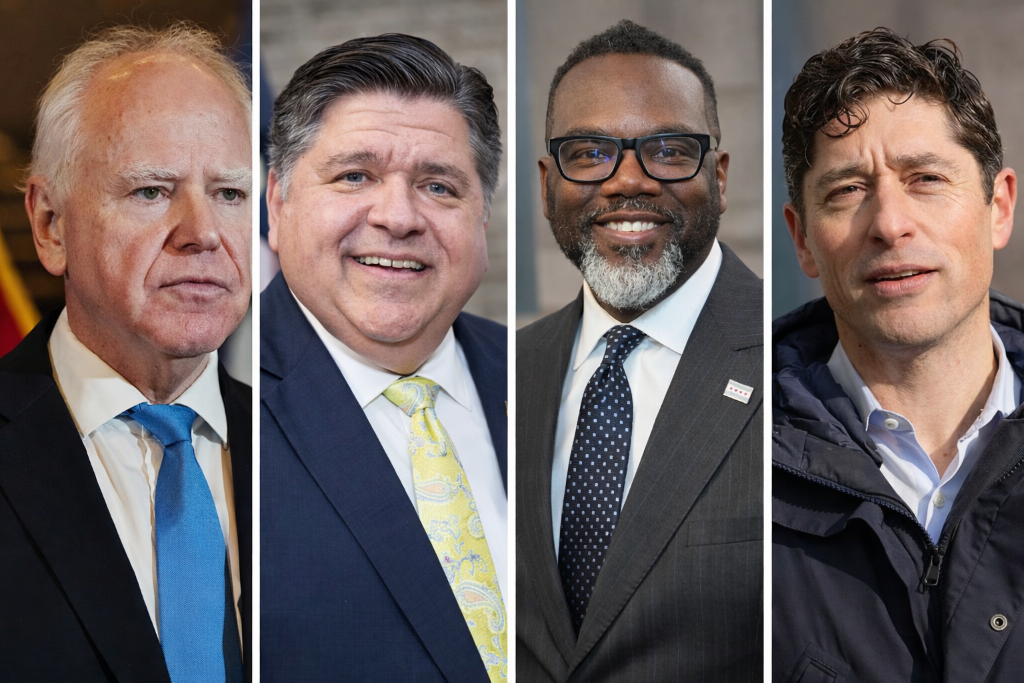
In Minnesota, tensions have intensified following protests and confrontations linked to federal Immigration and Customs Enforcement operations. State and local leaders, including Governor Tim Walz and Minneapolis Mayor Jacob Frey, have publicly opposed federal immigration actions and encouraged residents to monitor or document encounters with ICE. Supporters describe this as transparency. Critics argue it risks escalating confrontations and placing civilians and officers in dangerous situations.
The death of Renee Nicole Good during an encounter involving federal agents has become a flashpoint, fueling protests and activist mobilization. Federal officials have repeatedly warned that interference with law enforcement operations is illegal and dangerous, regardless of intent.
At the same time, Minnesota remains under federal scrutiny for massive fraud involving public assistance and nonprofit-administered programs. Federal investigations have already uncovered billions of dollars in misused or fraudulently obtained funds tied to pandemic-era programs. While state leaders deny intentional wrongdoing, they have acknowledged serious oversight failures.
Illinois Operates Under Similar Conditions
Illinois operates under many of the same political and structural conditions.
Under Governor JB Pritzker and Chicago Mayor Brandon Johnson, Illinois maintains some of the most restrictive limits in the nation on cooperation between local law enforcement and federal immigration authorities. Chicago remains a sanctuary city, and state law restricts information sharing with ICE in most cases. Supporters argue these policies protect vulnerable populations. Federal officials counter that they complicate enforcement and weaken the rule of law.
Illinois has also faced repeated questions about oversight of taxpayer dollars, including federal pandemic relief and migrant-related spending. Audits and investigations have revealed delayed reporting, limited transparency, and weak controls over nonprofit partners. As in Minnesota, accountability has often followed public exposure rather than proactive enforcement.
What This Means for Communities Like Antioch, Illinois
For towns like Antioch, these conflicts are not theoretical or distant.
When state leaders restrict cooperation with federal agencies, the practical burden often shifts downward to local governments that have fewer resources and less authority. Local police departments are left navigating unclear boundaries between state policy and federal law. Municipal budgets are strained as state-level decisions ripple outward without corresponding funding or guidance.
Antioch and similar communities also feel the impact when taxpayer dollars are mismanaged at higher levels. Every dollar lost to fraud or wasted through poor oversight is a dollar unavailable for local priorities such as public safety, infrastructure, schools, and emergency services. Small towns do not have the fiscal cushion that large cities enjoy, yet they are expected to absorb the consequences.
There is also a public safety concern. When activist groups are encouraged—explicitly or implicitly—to insert themselves into law enforcement encounters, the risk of escalation increases everywhere, not just in major cities. Tactics and rhetoric that begin in places like Minneapolis or Chicago rarely stay there. They spread through social media, organized networks, and political messaging, eventually reaching suburban and rural communities.
For residents of Antioch, this means uncertainty. It means local officials and law enforcement may be placed in the middle of disputes they did not create. It means community trust is strained when laws appear to be enforced selectively or inconsistently depending on politics rather than public safety.
Federal Response and Legal Framework
Vice President JD Vance and other federal leaders have warned that these conflicts represent more than routine policy disagreements. When state and local governments actively obstruct federal enforcement or encourage civilian involvement in enforcement actions, they risk destabilizing the balance between state authority and federal law.
The Insurrection Act has entered national discussion not as a political threat, but as a legal backstop available when states are unable or unwilling to protect federal operations or maintain public order. Its mere consideration reflects how far these disputes have escalated.
The Path Forward
For communities like Antioch, the takeaway is clear: decisions made in state capitols and major cities do not stay there. They shape local budgets, public safety, and the daily lives of residents. Political disagreement is normal. But when governance turns into open resistance and confrontation, it is local communities that absorb the cost.
Illinois now faces the same choice as Minnesota. De-escalation, transparency, and cooperation—or continued escalation that leaves towns like Antioch dealing with the fallout.
For more perspectives on current events, explore conservative news or share your views with conservative memes.