BREAKING NEWS
SPRINGFIELD, IL — December 23, 2025
The Illinois State Officers Electoral Board has issued a formal recommendation that Republican gubernatorial candidates Joseph Severino and Rantch Isquith be excluded from the March 17, 2026 Republican primary ballot, citing a failure to submit the minimum number of valid petition signatures required under Illinois election law.
In a comprehensive recommendation issued by Hearing Officer David A. Herman, the Board found that the Severino–Isquith campaign submitted 4,748 valid signatures, falling 252 signatures short of the 5,000-signature threshold required to qualify for ballot access.
📄 Official Electoral Board Recommendation
View and download the complete 19-page recommendation with exhibits:
Case No. 25 SOEBGP 531 - Newsome v. Severino, Isquith
The recommendation follows weeks of litigation, records examinations, motion practice, and evidentiary hearings before the State Officers Electoral Board.
Signature Requirement and Initial Objection
Under the Illinois Election Code, candidates seeking the Republican nomination for Governor and Lieutenant Governor must submit at least 5,000 valid signatures from qualified Republican primary voters.
Severino and Isquith filed nominating petitions containing 6,336 total signatures. On November 10, 2025, an objection was filed challenging the validity of a portion of those signatures, alleging issues such as:
- Signers not being registered voters
- Voters not registered at the listed address
- Incomplete or invalid addresses
- Duplicate or non-genuine signatures
The objection triggered a mandatory records examination by the Illinois State Board of Elections.
Results of the Records Examination
On November 25, 2025, Board staff conducted an official records examination in Springfield.
Key findings included:
- 2,520 signatures were challenged (39.8% of the total submitted)
- 1,588 challenged signatures were ruled invalid (63% of challenged signatures)
- 932 challenged signatures were ruled valid
- 3,816 signatures were unchallenged
After all rulings were applied, the campaign was left with 4,748 valid signatures, placing the candidates below the statutory minimum required for ballot access.
Campaign Motions and Legal Arguments
Following the records examination, the Severino–Isquith campaign filed multiple motions seeking dismissal of the objection and reinstatement of invalidated signatures. These included:
- Claims that the objection was filed in bad faith
- Requests to strike objections alleging non-genuine signatures
- Motions seeking additional time to submit evidence under Rule 9
- Attempts to rehabilitate invalidated signatures without certified voter records
The hearing officer rejected these efforts, finding that:
- Allegations of bad faith required evidence and were not established
- Late-submitted evidence failed to comply with Board rules
- Arguments alone, without certified voter records, could not rehabilitate signatures
- Procedural deadlines under the Board's rules were properly enforced
The hearing officer emphasized that the objection process resulted in a successful records examination, which independently confirmed the signature shortfall.
Pattern-of-Fraud Allegations Addressed
The recommendation also addressed claims alleging a "pattern of fraud" by a paid petition circulator. While testimony was heard from one circulator, the hearing officer ultimately concluded that clear and convincing evidence of fraud was not established, and that portion of the objection was dismissed.
Importantly, the hearing officer clarified that even without any findings of fraud, the campaign still failed to meet the minimum signature requirement, making the fraud issue legally irrelevant to ballot qualification.
Final Recommendation
In the concluding section of the recommendation, the hearing officer stated unequivocally:
- The Severino–Isquith ticket did not meet the 5,000-signature requirement
- The objection was not filed in bad faith
- The records examination was conducted properly
- The candidates' names should not appear on the Republican primary ballot
The hearing officer formally recommended that the Illinois State Officers Electoral Board deny ballot placement for both candidates in the March 17, 2026 Republican primary election.
What Happens Next
The State Officers Electoral Board will review the hearing officer's recommendation and issue a final ruling. Historically, such recommendations are adopted unless clear legal or procedural error is shown.
If adopted, the decision would permanently bar the Severino–Isquith ticket from the Republican primary ballot.
Why This Matters to Local Republicans
Ballot access laws exist to ensure fairness, legitimacy, and voter confidence in the election process. This case highlights the importance of campaign organization, compliance with election law, and accurate signature collection.
For Republican voters in Antioch and across Illinois, the ruling reinforces that election rules apply equally to all candidates, regardless of political rhetoric or campaign messaging.
Antioch Republicans will continue to monitor the final decision and provide updates as the Electoral Board issues its ruling.
About the Objector: Terry Newsome
The challenge to the Severino–Isquith nominating petitions was filed by Terry Newsome, a Republican activist based in suburban Cook County.
Newsome is not a candidate in the 2026 gubernatorial race and is an Elected Republican Committeeman. His involvement in the case was limited to filing a verified objection under provisions of the Illinois Election Code that allow registered voters to challenge the sufficiency of nominating petitions submitted by candidates seeking ballot access.
According to filings before the State Officers Electoral Board, Newsome's objection alleged that a substantial number of signatures submitted by the Severino–Isquith campaign were invalid due to issues such as voters not being registered at the listed address, incomplete or improper address information, duplicate signatures, or other deficiencies identified through voter record checks.
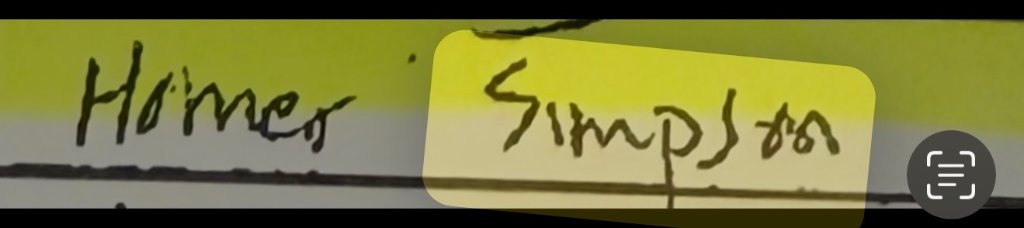
During the objection process, Newsome also reported instances he characterized as facially implausible entries on the petitions. Among them was a signature listed under the name Homer Simpson, with an address that, when reviewed, corresponded to a comedy club rather than a residential location. That signature was included among those challenged during the records examination.
The hearing officer ultimately determined that the objection was filed in good faith and that the resulting records examination independently confirmed the campaign failed to meet the minimum signature requirement for ballot access. While certain allegations raised by Newsome — including claims related to a broader pattern of fraud — were dismissed for failing to meet the legal standard required under Illinois law, the objection nonetheless resulted in the invalidation of enough signatures to place the candidates below the statutory threshold.
Petition challenges such as the one filed by Newsome are a routine component of Illinois' ballot certification process and occur in nearly every election cycle. State law permits such challenges as a mechanism to enforce statutory requirements and ensure the integrity of the ballot.
For more perspectives on current events, explore conservative news or share your views with conservative memes.